
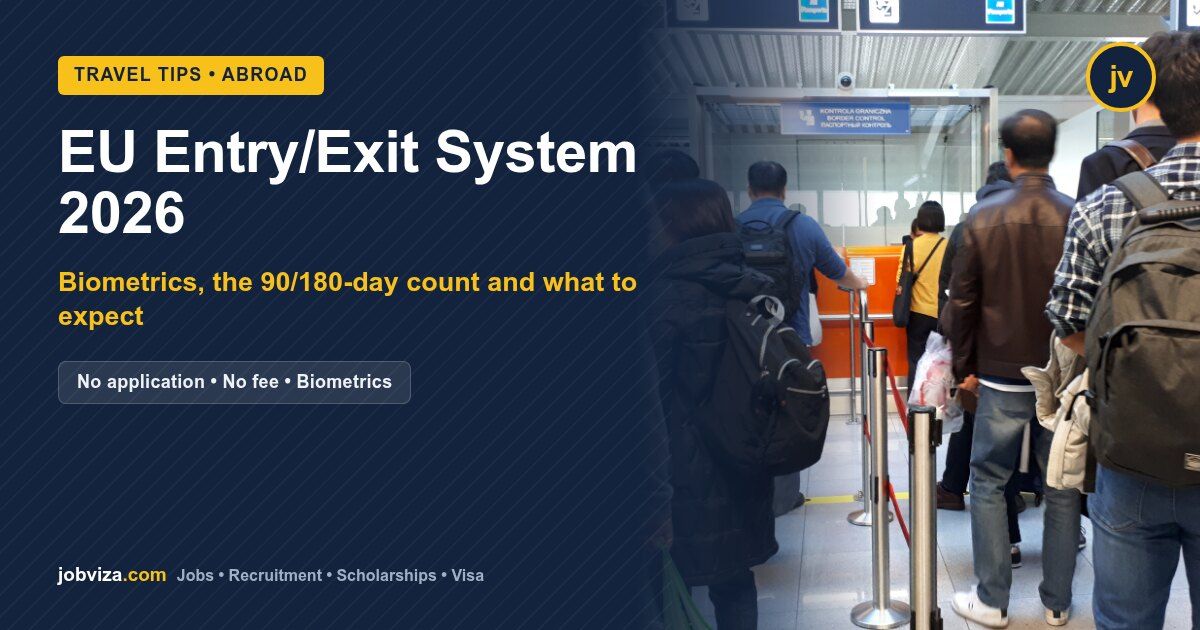
If you’re planning a trip to Europe, you’ve probably seen posts about the EU Entry/Exit System, and some of them are flat-out wrong. Let’s clear the air. The EES is not a visa, it’s not an application, and nobody can sell you “EES approval.” Here’s what it really is and what it means for Nigerian travellers.
What the Entry/Exit System actually is
The EES is an automated border system the European Union uses to register non-EU travellers each time they enter or leave the Schengen area. Instead of an officer stamping your passport by hand, the system records your crossing digitally. It became fully operational across Schengen border points as at the time of writing, after a phased rollout was completed.
So when you arrive at a Schengen airport or land border, your details go into this shared database. That’s the whole idea: a single, modern record of who comes in and goes out.
What gets recorded at the border
The first time you cross under EES, the system captures a set of details to build your file. After that, repeat crossings are quicker because your record already exists. What it collects includes:
- Your name and travel document (passport) information.
- Biometrics, meaning your fingerprints and a facial image.
- The date and place of each entry and exit.
This replaces the old ink stamp in your passport. The data is used to track your movements and to flag anyone who overstays.
The 90/180-day rule, counted automatically
Here’s where EES affects you directly. Short-stay visitors can spend a maximum of 90 days within any 180-day period across the whole Schengen area. Not 90 days per country, 90 days total.
Before now, officers calculated this by hand from passport stamps, which was messy. EES now counts it automatically. The moment your days add up, the system knows. Overstaying by even a few days can lead to refusal of entry next time, so keep your own count and don’t rely on guesswork.
EES is not ETIAS, and it’s not a visa
People mix these up constantly, so let’s separate them. EES is a border system that registers you when you arrive; you do nothing in advance and you pay nothing for it. It happens at the border itself.
ETIAS is a different thing entirely. It’s an advance travel authorisation, with a small fee, meant for travellers from visa-exempt countries. Neither EES nor ETIAS is a visa. And this is the key point for us: Nigeria is not visa-exempt, so Nigerians still need a Schengen visa to travel to Europe. EES does not change that one bit.
What this means for Nigerian travellers
Your process stays largely the same. You still apply for your Schengen visa the normal way before you travel. Our guide on the Schengen visa from Nigeria walks you through the steps, documents and appointment booking.
The new part is at the border. Expect to give fingerprints and a facial scan on your first EES crossing, so allow a little extra time, especially during busy travel periods. Once your record exists, later trips move faster.
Watch out for EES scams
Since the system launched, fraudsters have popped up selling fake “EES registration” or “EES approval.” There is no such thing to buy. You do not apply for EES and you do not pay for it, full stop. Anyone asking for money to “register” you for EES is scamming you.
The same caution applies to lookalike websites. Europe is rolling out new travel rules in stages, much like the UK ETA for Nigerians, and scammers thrive on the confusion. Stick to official sources and verify before you pay for anything.
Where to confirm the facts
Rules and rollout dates can shift, so check the official European Commission EES page for the current position. Details here are correct as at the time of writing.
Quick answers on the EU Entry/Exit System
Do I apply for EES before travelling? No. EES is automatic at the border. There’s no advance application and no fee.
Does EES replace my Schengen visa? No. Nigerians still need a Schengen visa. EES only registers your entry and exit.
What does it record? Your passport details, fingerprints, a facial image, and the date and place of each entry and exit.
Is EES the same as ETIAS? No. EES registers you at the border; ETIAS is a separate advance authorisation for visa-exempt travellers. Neither is a visa.
Reviewed by Miles Obi, Careers and Scholarships Editor at Jobviza.
Related guides
- UK ETA For Nigerians 2026: New Travel Rules You Must Know
- Qatar Jobs and Pay for Nigerians 2026: Official Minimum Wage and Offer Safety
- U.S. Visa for Nigerians: Official 2026 Application Guide
- US DV Lottery (Green Card Lottery): A Guide for Nigerians
Discover more from Jobviza
Subscribe to get the latest posts sent to your email.