
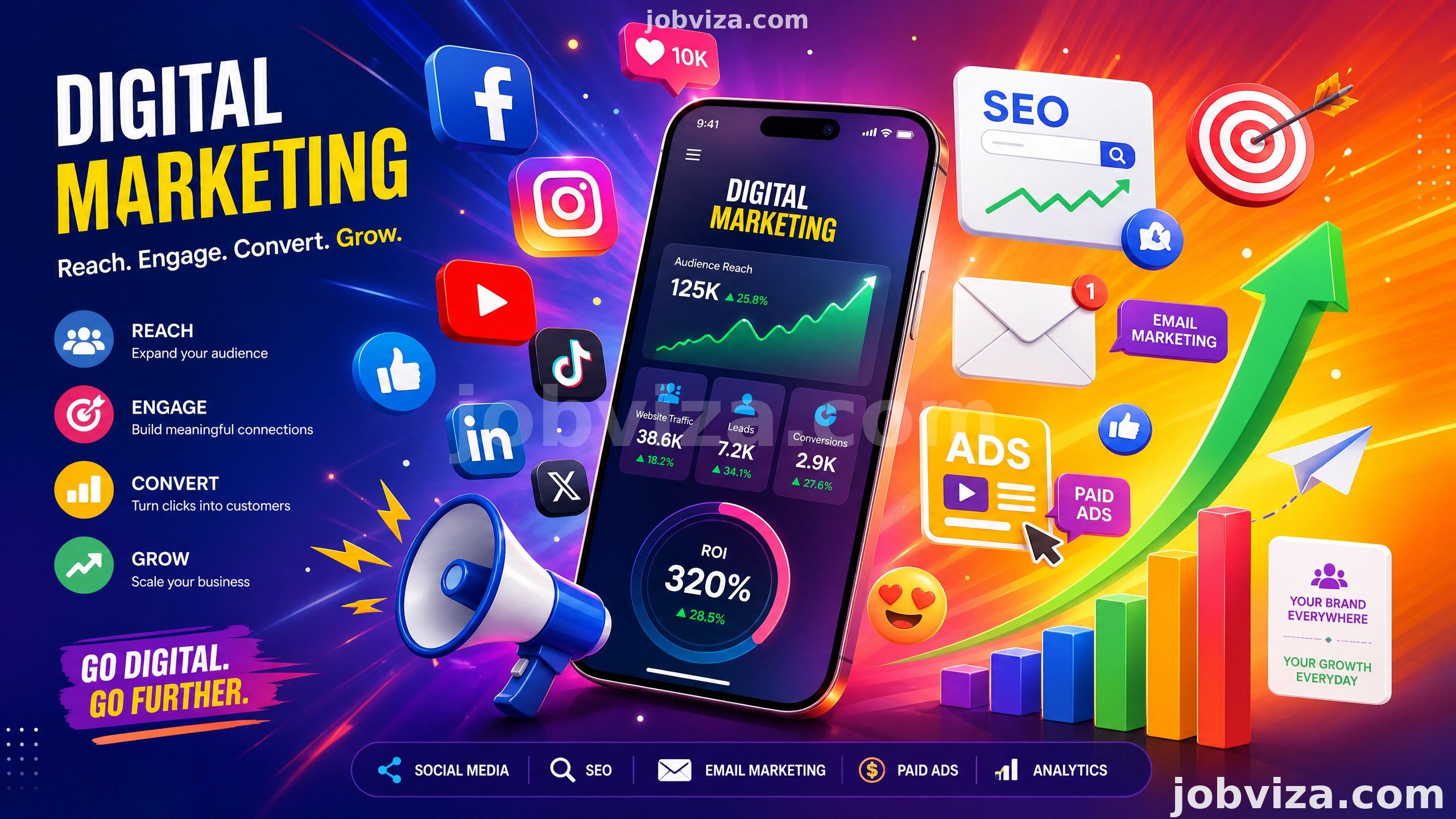
Digital marketing is one of the most practical skills you can learn in Nigeria, because you can practise it straight away on a real page, product or small business. It covers content, social media, search, email and paid ads, held together by one habit most beginners skip: measuring what works. Anyone can post. The skill is knowing which post brought results, and why.
Reviewed by Miles Obi.
Start with the official course page
If you want a structured start, look at the Google Digital Marketing and E-commerce Certificate on grow.google. It covers the fundamentals in a structured way. Here is what we could confirm on the official page at the time of writing:
- It has 7 courses and is designed to be finished in under 6 months at under 10 hours a week.
- It is offered on Coursera.
- After a 7-day free trial it costs $49 a month. If you do not cancel, the renewal price shown is $19.99.
- Prices vary by location, so the amount you see in Nigeria may be different. Check the official site for the price shown to you before you pay anything.
Course contents, access options and prices change, so confirm everything on the official page. If you cannot see a Naira price, do not guess one. Check the official site.
What you actually need
You do not need an expensive setup to begin. You need:
- A phone or laptop and a data plan you can rely on, since most tools and lessons are online.
- A real thing to market. That can be a small business, a page you already run, or a mock brand you create for practice.
- Willingness to look at numbers, because measurement is where the skill lives.
A realistic learning path
- Learn the core areas: content, social media, search basics, email, and an introduction to paid ads.
- Pick one real page or product and set a simple, clear goal for it, such as more enquiries or more sign-ups.
- Run small tests, then check what actually moved the goal using free analytics tools. Check the official site for the current setup steps of any tool you use.
- Keep a short record of what you tried and what changed. That record becomes your proof of skill for clients or employers.
Honest expectations about money
Paid ads cost money, so start with organic methods and very small budgets while you learn. Be careful with anyone promising that you will become a marketing expert and earn in dollars fast. Real results come from steady practice on real pages. Your early wins will probably be small local clients, and that is normal.
A recognised credential can help you stand out, so compare the options in our guide to the Google Career Certificates. To learn without overspending, read our breakdown of free online courses for Nigerians. Before you pay for any course, check the official site for the current price and terms.
Where digital marketing skills can take you
Digital marketing is broad, which is good news when you are looking for work. The skills open doors to roles such as social media manager, content creator, SEO assistant, email marketer and paid-ads specialist. They also support freelance work for small businesses that cannot afford a full agency.
Many Nigerians start by managing one or two local brands, then grow into managing several, or into a specialist lane once they know which part of the work they enjoy most. You do not have to master everything at once. Learn the basics, then go deeper where the results and your interest point.
Build proof before you chase clients
Nobody pays for promises they cannot see, so build something real first. Take your own page, a mock brand, or a willing small business, set a clear goal, and work toward it for a few weeks. Keep a simple record of what you tried and what changed: followers, enquiries, sales, or whatever the goal was.
That record becomes your portfolio. A screenshot of real growth convinces a client far more than a certificate alone. Be honest in the record too. If a test did nothing, write that down, because a clear account of a failed test shows more skill than a vague claim of success.
How to measure whether anything is working
Measurement is the part of digital marketing that separates a hobby from a skill. Before you start any test, write down one goal and one number that shows progress toward it. If the goal is more enquiries for a small shop, the number is enquiries per week. If it is more readers for a blog, it is visits from search or social media per week. Keep the goal small enough that you can check it in a few weeks.
Once the test runs, look at the number every week, not every hour. Change one thing at a time, so you can tell what caused a result. If you change the headline, the picture and the posting time together, you will not know which one helped.
Free analytics tools can show you where visitors come from and what they do next. Learn to read those reports before you spend money on ads, because the same reports will tell you whether an ad is bringing real people or just clicks. Check the official site of any tool you use for its current setup steps and terms, since free plans and features change.
Keep your notes simple. A short table in a notebook, with the date, the change, the number before and the number after, is enough. Over a few months, those notes show you what your audience responds to. They also become the case study you show a client, which is far more convincing than a claim that you are good at marketing.
Why ads come later
Paid ads look like the fastest route, and that is exactly why beginners lose money on them. An ad only shows your message to more people. If the page, the offer or the message is weak, paying for more people to see it just burns money faster. Learn what works on your organic posts and your page first. Then, when you have a clear message that people already respond to, a small ad budget can test whether it scales.
Common mistakes that slow beginners down
- Posting constantly without ever checking what actually worked.
- Spending on ads before understanding the organic basics.
- Chasing every platform instead of getting good at one or two.
- Promising clients quick, guaranteed results you cannot control.
- Measuring vanity numbers, such as likes, instead of the goal you set.
Watch out for this scam
Be careful with anyone offering a “guaranteed marketing job” or a “digital marketing certificate” for an upfront fee, especially if they ask you to pay into a personal bank account or to pay today to secure a place. Real course providers publish their pricing and terms on their official sites. If a message pushes you to pay quickly or skip reading the terms, walk away. Verify any offer on the provider’s official website before you send money.
Frequently asked questions
Do I need a degree to get into digital marketing? No. Clear proof of work, such as a record of real campaigns or a portfolio, matters more to most clients and employers than a degree.
Do I need to pay for ads to learn? Not to learn the basics. You can practise organic methods for free and add a small budget later, once you understand what you are measuring.
Which skill should I start with? Start with the one that matches your real goal. If you want enquiries for a shop, start with social media and content. If you want clients who need traffic to their site, look at search basics.
How long until I can get paid work? It depends on your effort and your proof of results. Many people start with one or two small local clients after a few weeks of practice on real pages.
Source: Google Digital Marketing and E-commerce Certificate on grow.google. Confirm the current course contents, duration, pricing and access options on the official page before you enrol.
Reviewed by Miles Obi, Careers and Scholarships Editor at Jobviza.
Discover more from Jobviza
Subscribe to get the latest posts sent to your email.