
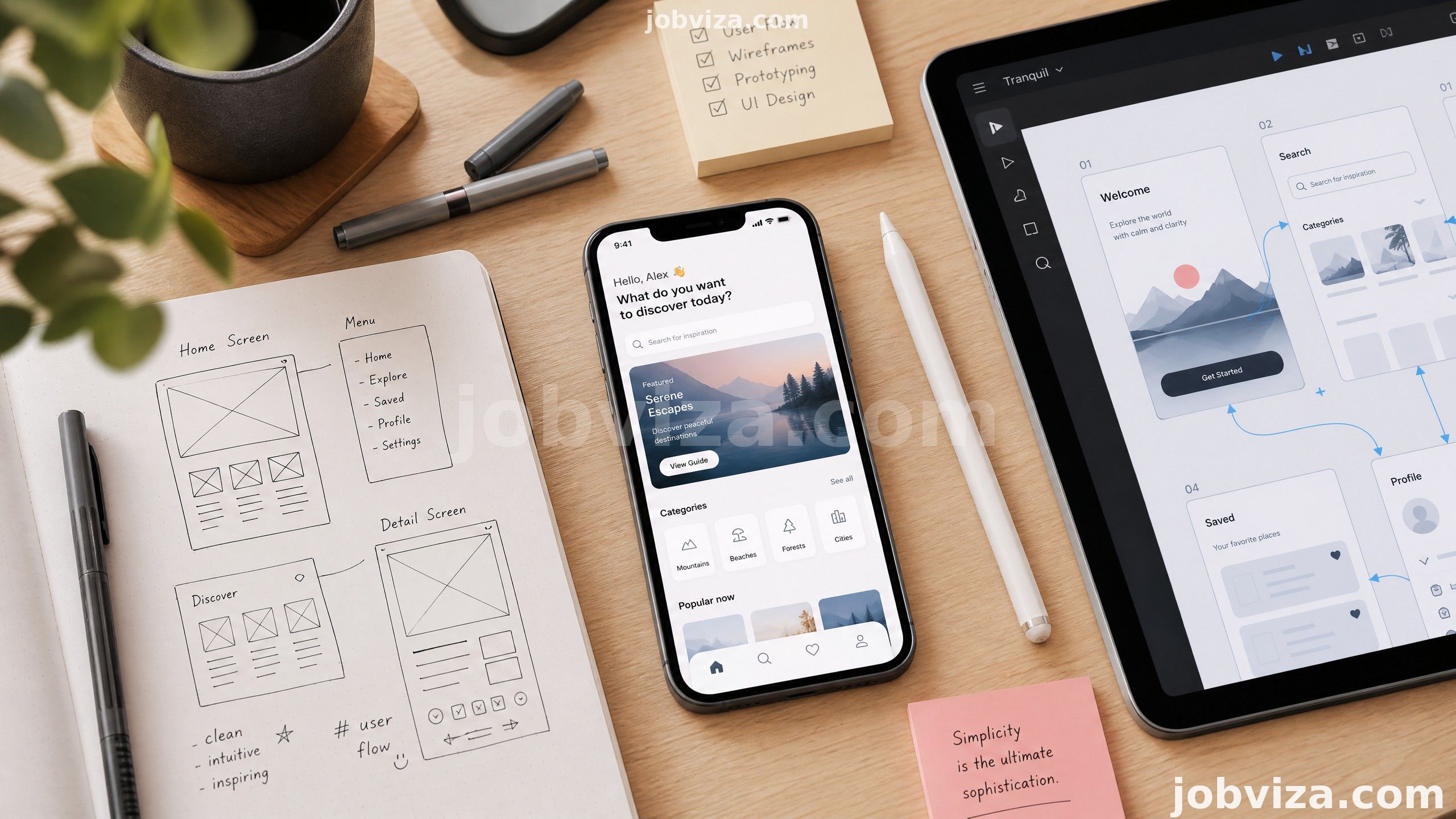
UI/UX design is one of the few tech paths Nigerians can move into without a computer science degree, but most of the advice online hides the real work. UI is how a product looks. UX is how it feels to use, and whether a person can finish a task without getting lost. Employers do not hire you for watching tutorials. They hire you for a portfolio that shows you can take a real problem, think it through, and produce something people can use. So your goal from day one should be finished work you can show, not a folder full of certificates.
Written by Miles Obi, reviewed for accuracy against official sources where stated.
Start with the official course page
If you want a structured starting point, look at the Google UX Design Certificate on grow.google. It is built for beginners, it covers user research, wireframes and prototypes, and it is widely recognised by hiring managers as a serious foundation. Here is what we could confirm on the official page at the time of writing:
- The certificate is designed to take about 3 to 6 months at 5 to 10 hours a week.
- In the United States and Canada, it costs $49 a month after a 7-day free trial.
- Pricing in other countries is different, so check the official site for the price shown to you in Nigeria.
Course contents, access options and prices change, so confirm everything on the official page before you pay anything. If you cannot see a Naira price, do not guess one. Check the official site.
What you actually need to start
You do not need an expensive setup to begin. You need a few things, and you need them to be reliable:
- A laptop that can run a design tool in the browser. Many beginner tools run online, so you do not need a high-end machine.
- A free Figma account. Figma is the tool most Nigerian product teams use, and the free plan is enough to learn with.
- A data plan you can rely on. Video lessons use a lot of data, so plan for it or download lessons when you have a stable connection.
- Time set aside every week. Three focused sessions beat one long weekend of cramming, because design skill builds through repetition.
A realistic learning path
Most people who get hired in this field follow a similar path, even if they start from different places.
- Learn the basics of user research, wireframes and prototypes through one structured course. Finish it. Do not start a second course until the first one has become real work for you.
- Rebuild an app you already use every day, then redesign one screen of it. Write down what bothers you about the screen, what you would change, and why.
- Do two or three small projects from start to finish. Each one should have a problem, research, sketches, a prototype and a final screen.
- Turn each project into a short case study and put them in a simple online portfolio. A portfolio is what gets you interviews, not your certificate list.
Honest expectations about money
Your first paid work may be small and local, such as a small business that needs a website redesigned or a startup that needs a clickable prototype. That is normal. Remote or international work usually comes after you have a strong portfolio and some feedback from people who have used it.
Ignore anyone promising large dollar earnings in a few weeks. Those promises usually sell a course, not a career. The more useful goal is to build one strong portfolio, get honest feedback from working designers, and let the income conversation follow the quality of your work.
If you want to compare structured credential options, read our guide to the Google Career Certificates. If you are trying to figure out what is genuinely free before you spend money, read our breakdown of free online courses for Nigerians. Before you pay for anything, check the official site for the current price and terms.
How to build a portfolio that gets interviews
In UI/UX, your portfolio is your real qualification. Aim for two or three complete case studies rather than a dozen half-finished screens. For each one, show:
- The problem you set out to solve, in one or two plain sentences.
- The research or thinking behind your choices, including who you spoke to or what you observed.
- Your wireframes and prototype, so the reader can see how the idea changed.
- The final design, and a short note on what you would improve next time.
Explaining your reasoning matters as much as the visuals. Employers want to see how you think, not only that you can make something look nice. A short, honest case study of a real or realistic problem beats a flashy screen with no story behind it. If you have no real clients yet, pick a service you use every day, such as a banking app, a food delivery app or a school portal, and redesign one part of it. Say clearly in the case study that it is a personal project.
Where UI/UX skills can take you
UI/UX skills open doors well beyond one job title. Many designers in Nigeria start with freelance projects or junior roles, then move into product design, design research or team lead positions as their portfolio grows. Because so many businesses now build apps and websites, these skills travel well. You can work with local startups, or with remote teams that pay in foreign currency, once your work is strong enough to show.
The field has more room than many beginners realise. You can grow into UI design, UX research, product design or interaction design. The same skills also help if you move toward product management or front-end development later. You do not have to decide your exact lane on day one. Learn the fundamentals, build real work, and the direction that suits you will become clearer over time.
Common mistakes that slow beginners down
- Collecting courses instead of finishing real projects. A finished small project teaches more than an unfinished big one.
- Designing pretty screens with no problem or reasoning behind them. Hiring managers notice this quickly.
- Skipping user research because it feels less exciting than visuals. Research is the part that makes the design right.
- Comparing your early work to experienced designers and giving up too soon. Everyone’s first portfolio looks rough.
- Asking for feedback only from friends who will say everything looks nice. Ask people who use apps every day and who will tell you what confused them.
Watch out for this scam
Be careful with anyone offering a “guaranteed UI/UX job” for an upfront fee, or a “placement programme” that asks you to pay a registration fee to a personal account before you have seen any course content or contract. Real course providers publish their pricing and terms on their official sites. If a message pushes you to pay today, to a bank account in someone else’s name, or to skip reading the terms, walk away. Verify any offer on the provider’s official website before you send money.
Frequently asked questions
Do I need a degree? No. A strong portfolio matters more than a certificate for most UI/UX roles, although a certificate can help you structure your learning.
Which tool should I learn first? Start with Figma. It is free to begin with and it is common in Nigerian product teams.
How long until I am job-ready? With steady practice, it usually takes several months to build real projects that you can explain. There is no honest shortcut, so focus on consistency.
Do I have to pay for a course? Not always. Some learning resources are free, but the Google UX Design Certificate is a paid subscription after its free trial. Check the official site for the current pricing and whether it applies in your country.
Source: Google UX Design Certificate on grow.google. Confirm the current course contents, duration, pricing and access options on the official page before you enrol.
Reviewed by Miles Obi, Careers and Scholarships Editor at Jobviza.
Discover more from Jobviza
Subscribe to get the latest posts sent to your email.