
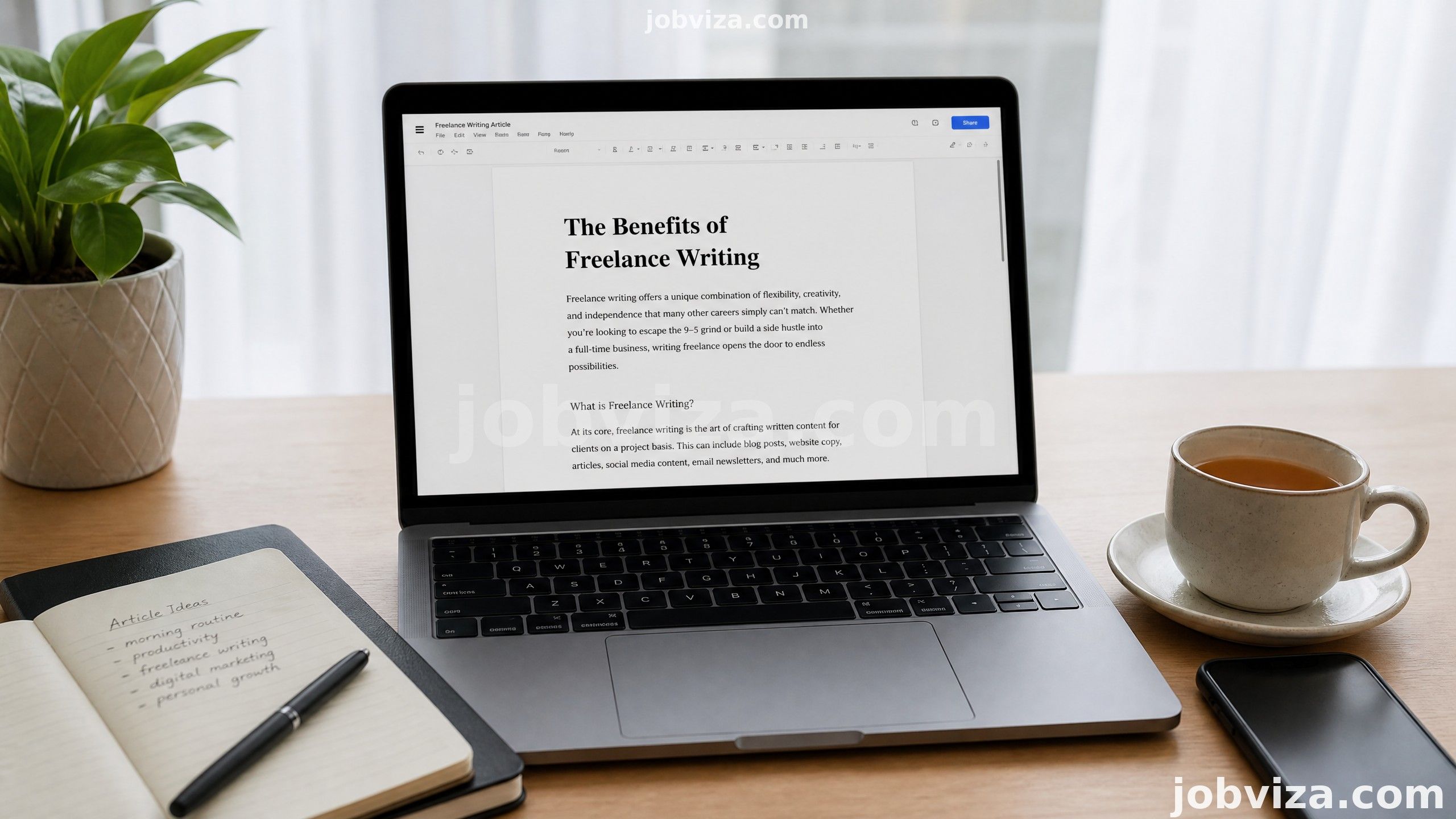
Freelance writing is one of the few online jobs a Nigerian can start with a laptop, a phone and a steady connection, and it is one of the few that often pays in US dollars or pounds. A client in the United States, Canada or the United Kingdom can pay you for a blog post, a product description or an email newsletter without you leaving Lagos, Ibadan or Enugu. That is the appeal. The reality is less glamorous. Most writers who earn steadily spent months building a skill, wrote samples nobody paid for, and sent a lot of pitches before the first real reply came in.
This guide is the honest version. It covers the kinds of work available, what beginners can realistically expect, how to start step by step, how to get paid from Nigeria, and the mistakes that cost new writers the most time and money.
Why freelance writing pays in dollars
Most writing demand comes from businesses abroad that need content for websites, newsletters and social channels. Their budgets are in foreign currency, so when you invoice them, the naira value of your earnings can be much higher than the same effort would earn locally. That gap is why freelance writing attracts so much attention. It is not a guarantee, and exchange rates move. Check the official site of your bank or payment service for current rates and fees before you plan around any figure.
Types of freelance writing work
Writing is not one job. The main types people get paid for are these:
- Blog and article writing: explainers, how-to posts and listicles for content sites and small businesses.
- Website copy: home pages, service pages, about pages and product descriptions. This often pays more per job because the client needs the text to turn visitors into customers.
- Email newsletters: regular issues or short sequences for founders and online brands.
- Social media and LinkedIn content: captions and posts written for founders or companies that want a steady voice online.
- Technical or niche writing: software documentation, health, finance or property content. Harder to break into, but better paid once you know the subject.
- Copy editing and proofreading: a good entry point if your grammar and structure are sharp, because clients often need this before they need full articles.
What beginners can realistically earn
We could not verify current published rates for Nigerian freelance writers from an official or reliable source during this update, so this post does not quote a sourced figure. As a general guide only, many beginners start with small jobs that pay modestly and take a few months to reach regular work. Rates on any platform vary widely by client, niche and quality. Treat any number you see on social media as a claim, not a benchmark, and check the official site of each platform for its own rate and fee information.
How to start, step by step
- Pick one or two niches. Writing about everything makes you look like a generalist to clients. Choose topics you already know, such as personal finance, tech, education or travel, and go deeper there.
- Write three to five samples. Each sample should be in your chosen niche and should read like a finished piece a client could publish. Nobody needs to pay you for these first. They stand in for client work.
- Make a simple portfolio. A one-page website, a shared document or a featured section on your LinkedIn profile is enough. Link each sample with one line on what it does.
- Set up profiles on freelance marketplaces. Upwork and Fiverr are crowded but real places where clients post writing jobs. Read each platform’s current seller rules, verification steps and fee details on its official site before you commit. Do not pay any platform to be hired.
- Land small first jobs. Price low enough to win the work, but not so low that revisions wipe out your time. Small paid jobs build reviews, and reviews make the next pitch easier.
- Ask for a review and a referral. Every finished client is a possible source of the next one.
If your grammar or structure needs work, Coursera has writing and content courses from universities and training providers. A search for writing on Coursera shows options such as creative writing, academic English and editing courses. Many of them let you preview the first module at no cost, and Coursera offers a 7-day free trial for specializations and Coursera Plus. Check the official site for current course details, length and whether a certificate costs extra. You can start with the search results here: Coursera writing courses. For more free options, read our guide to free Coursera courses with certificates for Nigerians.
Getting paid from Nigeria
Payment is where new writers worry most, and it is manageable once you know the options. Many foreign clients pay through a platform’s own withdrawal system, a payment service that gives you a foreign receiving account, or a direct bank transfer. Payoneer is one of the services Nigerian freelancers commonly use to receive foreign payments. Its account types, fees, supported currencies and withdrawal options are on its official site, so check them there before you open an account. You can read our step-by-step guide on how to set up Payoneer in Nigeria for the process.
Agree the currency, amount, payment date and who pays any transfer fees in writing before you start work. For bigger jobs, ask for a deposit upfront. Keep simple records of every payment you receive, because that makes it easier to track your growth and to handle any tax obligations as your income rises. Check the official site of the relevant tax authority for current rules rather than relying on a friend’s summary.
The growth path
In your first few months, your job is to get samples, a handful of clients and a few reviews. That stage is slow and it is supposed to be. Once you have three to five satisfied clients, you can start raising your rates, moving from one-off articles to monthly retainers, and pitching for work in the niche you have built. Retainers are the difference between a month of hustle and a steady income, because a client who uses you every month saves you from constant prospecting.
After that, specialize harder. A writer known for fintech explainers or healthcare content gets referred more often and is harder to replace on price. Packages help too. A set price for a blog post plus two social posts is easier to buy than a vague hourly rate. Many writers who last also build a second skill next to writing, such as basic SEO, editing or simple social media management. Our guide to virtual assistant work in Nigeria covers one related route.
Common mistakes new writers make
- Writing for free for “exposure” or “a chance to work with us” when nothing is being paid.
- Starting work without written terms on scope, deadline, payment and revisions.
- Taking every job at any price, which fills your week with work that pays badly and leaves no time for better clients.
- Sending the same generic pitch to everyone instead of writing one that names the client’s website or problem.
- Skipping a final proofread. Clients forgive a slow reply faster than a typo in their own headline.
- Paying for “guaranteed clients” or “premium leads” that a platform or seller promises.
Scam warning
Be careful with any client who asks for a full free article as a “test,” asks for your bank login or card details, sends you a cheque or payment and asks you to send back the difference, or offers to pay through a method you cannot verify on the official site. A short, clearly stated paid test is a fair way to check a new client. A free full article for a company that will not pay anyone is not a test, it is free work. Verify any payment service on its official site before you share your account details.
Frequently asked questions
Can I start with no experience? Yes. Write your own samples first. They take the place of client work until you have paid jobs to show.
Do I need a degree? No. Clients judge the work. Strong English, clear structure and the habit of editing your own writing matter far more than a certificate.
How long before my first paid job? It varies. Many people wait several weeks to a few months. This is a general observation, not a sourced figure.
Is it free to join a freelance platform? Check the official site of each platform for its current membership, listing and withdrawal fees. Be wary of any platform that asks for an upfront payment to unlock jobs.
Should I pay for a writing course first? Use free previews and free course information first. Before paying, check the official site for the course content, length and any certificate charge.
Related guides
- Side Hustles in Nigeria: Practical, Safer Ways to Start
- How to Make Money on Fiverr from Nigeria in 2026
- How to Set Up Payoneer in Nigeria in 2026
- Free Coursera Courses With Certificates for Nigerians
- Freelance Writing for Beginners in Nigeria
Last updated: October 24, 2026
Reviewed by Miles Obi, Careers and Scholarships Editor at Jobviza.
Discover more from Jobviza
Subscribe to get the latest posts sent to your email.