
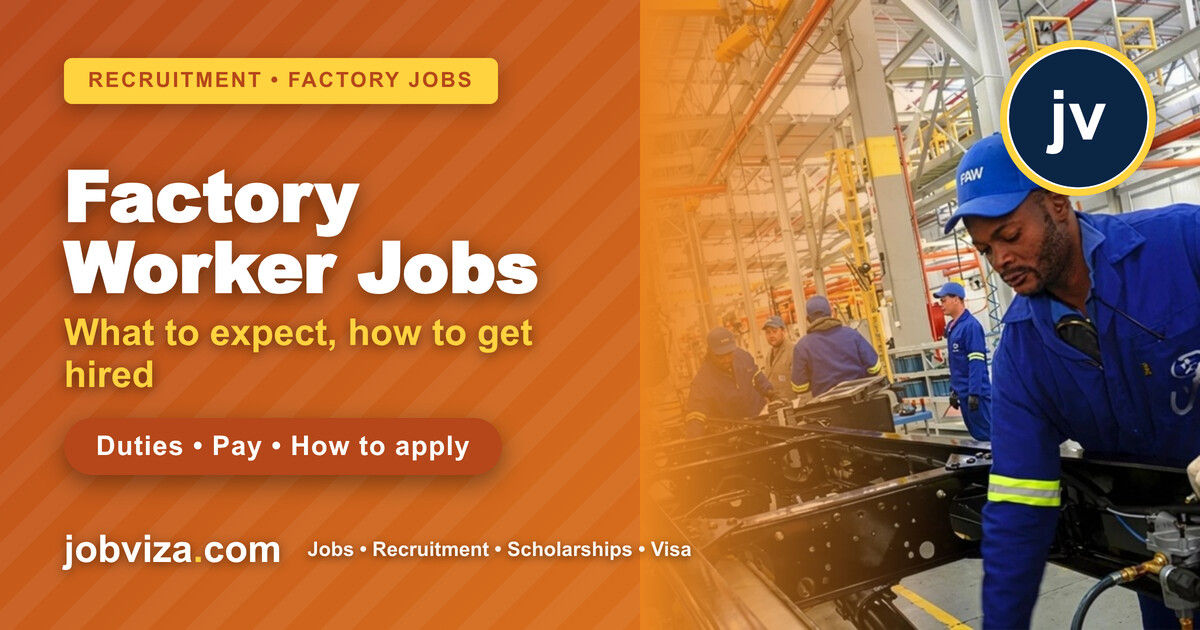
Nigeria’s factories never sleep, and they need hands to keep the lines moving. Factory worker jobs in Nigeria offer steady work for people ready to show up and put in the effort. Many roles welcome fresh applicants with just a school certificate.
Here is what to expect and how to get in.
What factory workers do
Factory work covers many tasks on the production line. You could be operating a machine, packaging finished goods, sorting items, or helping with quality checks. The work is hands-on, often done in shifts, and it rewards people who are reliable and quick to learn.
Common roles
- Production or machine operators.
- Packaging and labelling staff.
- Quality control assistants.
- Warehouse and store hands.
- General plant assistants.
Where the jobs are
The biggest employers are manufacturing companies. Think food and drink producers, breweries, bottling plants, cement makers, and consumer goods firms. Industrial areas in Lagos, Ogun, and other states are full of these factories.
Requirements
Most factory worker jobs in Nigeria ask for a secondary school certificate and good physical fitness. You should be ready for shift work, including nights at some plants. Discipline, attention to safety, and the willingness to follow instructions matter more than paper qualifications.
How to apply
1. Prepare a basic CV
Keep it simple. List your education, any prior work, and your availability for shifts. Honesty about what you can do goes a long way.
2. Target industrial areas
Many factories hire locally. Check openings online and visit the industrial estates near you, since some plants still post vacancies at their gates.
3. Be ready for a quick screening
Some employers run a short test or a basic medical check. Show up early, neat, and ready to work.
4. Learn fast on the job
Once hired, pay attention during training. Workers who master the process and follow safety rules are the ones who get kept and promoted.
Protect yourself from scams
A real factory will not ask you to pay for a job. If someone demands a fee for “forms” or “slots”, that is a scam. Deal with the company directly or with a trusted recruiter, and confirm any offer before you travel far for it.
You can browse openings on Jobberman. Read our guide on fake recruitment scams in Nigeria first, and for side income ideas, see the best side hustles in Nigeria.
Common mistakes that cost factory workers the job
A lot of people lose factory worker jobs in Nigeria not because the work is hard, but because of simple habits. Poor attendance is the biggest. Production runs on shifts, so one person missing throws off the whole line, and supervisors remember who shows up. Ignoring safety rules is the next danger. Skipping gloves, boots or ear protection to “save time” can cause an injury that ends your work entirely.
Carelessness with quality also hurts. When your station keeps sending out defects, the company counts the cost and so do you. Avoid gossip and clashes on the floor, because teamwork keeps the line moving. Learn one extra machine or process when you can. Workers who are reliable and willing to learn are usually the first to be made permanent or promoted.
Frequently asked questions
Do factory worker jobs in Nigeria need a degree?
No. Most need a secondary school certificate, fitness, and a willingness to work shifts.
Is the work shift-based?
Often yes. Many plants run day and night shifts, so be ready for rotating hours.
Can factory work lead to growth?
Yes. Reliable workers can move up to supervisor or machine specialist roles over time.
Reviewed by Miles Obi, Careers and Scholarships Editor at Jobviza.
Related guides
- Wema Bank Careers: Official Graduate Trainee and Jobs Guide
- Canada Caregiver Jobs: Check Official Route Status and Avoid Scams
- Government Jobs With O’Level in Nigeria: Apply Now
- How to Get Oil and Gas Jobs in Nigeria (Even Without Connections)
Discover more from Jobviza
Subscribe to get the latest posts sent to your email.