
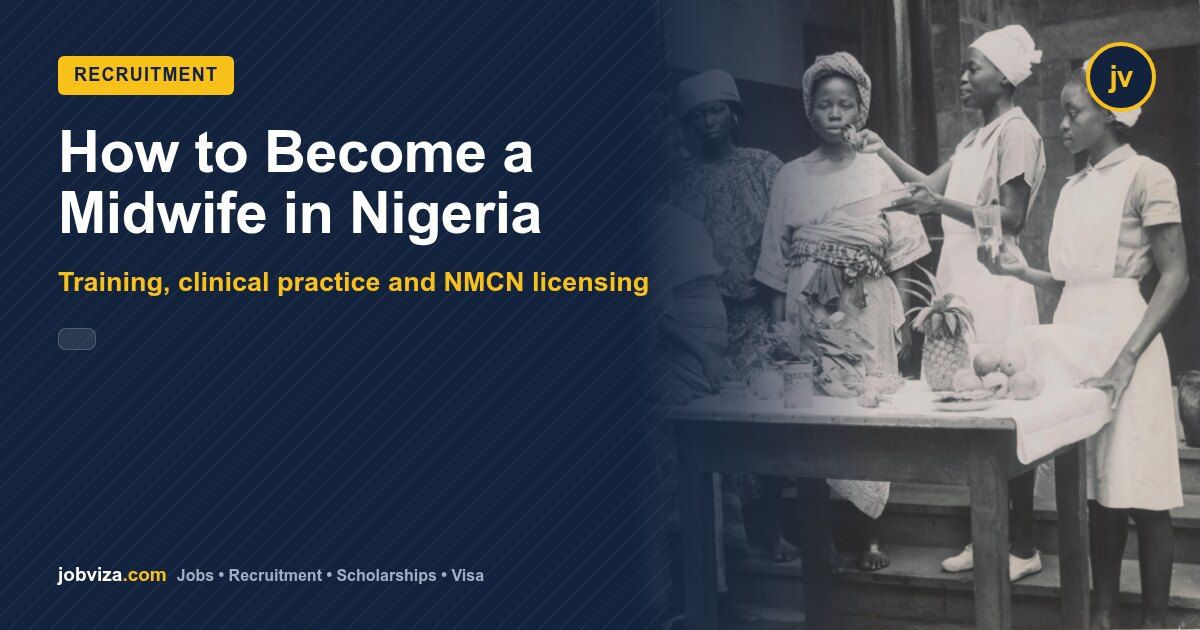
Helping mothers bring new life into the world safely is one of the most rewarding jobs out there. If that calling speaks to you, becoming a midwife in Nigeria is a clear and respected path. It takes proper training, supervised practice, and licensing before you can practise, but the demand for skilled midwives keeps growing. Here’s exactly how to get there, from school to registration.
What a midwife does
A midwife cares for women through pregnancy, labour, delivery, and the weeks after birth. In Nigeria, midwives work in hospitals, maternity centres, primary health clinics, and rural communities where they’re often the first point of care. The job covers antenatal checks, safe delivery, newborn care, family planning advice, and spotting complications early so mothers get help in time.
Routes to becoming a midwife
There are two common paths into midwifery in Nigeria, and both lead to professional licensing.
- Basic midwifery: you enter a school of midwifery straight after secondary school and train for about three years
- Post-basic midwifery: you first qualify as a registered nurse, then take an added programme in midwifery, usually around eighteen months
Some universities also offer a degree in nursing science that includes midwifery, giving you a BNSc alongside the professional qualification. Your choice depends on your goals, your results, and the time you want to invest.
Entry requirements
For admission into a school of midwifery, you’ll usually need five SSCE credit passes at not more than two sittings. These should include English, mathematics, biology, chemistry, and physics. Many schools also run an entrance examination and an interview, so good grades alone don’t guarantee a slot.
For the degree route through a university, you’ll also sit UTME with the right subject combination. If you’re aiming at the nursing-first path, our guide on how to become a nurse in Nigeria breaks down that journey in full.
Training and clinical practice
Midwifery is hands-on, so a big chunk of your training happens on the ward, not in the classroom. You’ll do clinical postings in labour rooms, antenatal clinics, and postnatal units under the watch of experienced midwives. You must assist with a set number of deliveries and care cases before you can qualify. This is where the real skill is built, so take every posting seriously.
Licensing with the regulator
To practise legally, you must register with the Nursing and Midwifery Council of Nigeria, known as NMCN. After completing an accredited programme, you sit the council’s professional qualifying examination. Passing it earns you your licence to practise as a midwife. You’ll also need to renew your licence from time to time and keep learning to stay current.
Always confirm approved schools and current requirements on the official regulator’s site at nmcn.gov.ng. That way you avoid unaccredited programmes that can waste your time and money.
Skills and qualities that help
Beyond the certificate, these qualities make a strong midwife.
- Calmness and quick thinking during emergencies
- Compassion and patience with mothers and families
- Sharp attention to detail and good record keeping
- Physical stamina for long shifts
- Clear communication and teamwork with doctors and nurses
Career prospects and earnings
Qualified midwives are in steady demand across public and private health facilities, and many go on to specialise, teach, or work abroad after meeting foreign licensing rules. Pay varies by employer, location, and experience, with government hospitals following salary scales and private facilities differing widely. If you want to see where the roles are, check our guide on how to check the school of nursing admission list to start your journey right.
Quick answers on becoming a midwife
How long does it take? Basic midwifery runs about three years; the post-basic route adds around eighteen months after nursing.
Do I have to register with NMCN? Yes, you must be licensed by the council to practise legally.
Can a nurse become a midwife? Yes, through the post-basic midwifery programme after qualifying as a nurse.
Is midwifery a good career in Nigeria? Yes, demand is strong at home and abroad, and the work is deeply meaningful.
Reviewed by Miles Obi, Careers and Scholarships Editor at Jobviza.
Related guides
- How to Become a Pharmacist in Nigeria: Steps and Requirements
- How to Become a Doctor in Nigeria: Steps, Schools and Requirements
- How to Become an Accountant in Nigeria: Steps and Requirements
- How to Become a Pilot in Nigeria: Steps and Requirements
Discover more from Jobviza
Subscribe to get the latest posts sent to your email.